Monday, May 7, 2018

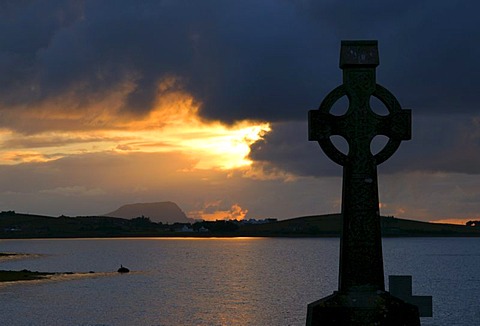
Beyond the Horizon


We seem to give him back to you, dear God, who gave him to us. Yet as you did not lose him in giving, so we have not lost him by his returning. Not as the world gives, do you give, O Lover of Souls! What you give, you do not take away. For what is yours is ours always, if we are yours. Life is eternal; and love is immortal; and death is only a horizon; and a horizon is nothing but the limit of our sight.

Lift us up, strong Son of God, that we may see further; cleanse our eyes that we may see more clearly; draw us closer to yourself that we may know ourselves nearer to our beloved who are with you. And while you prepare a place for us, prepare us for that happy place, that where they are, and you are, we too may be; through Jesus Christ our Lord.            
Rossiter Raymond

This prayer, by Rossiter Raymond, who lived in the early 1900’s, is a wonderful reminder to us of the both the pain and the joy found in the limitedness of our humanity. While it is true that we are limited by our mortality, we also need to be reminded that we are limited as well in our full understanding of reality.

Because of the limitedness of our ability to fully comprehend our existence, our creator became flesh, lived among us, and showed us a glimpse of what lies beyond the horizon of our senses. Because of Jesus’ life and gospel, we know that what lies beyond the horizon is a place of joy and peace, a place of heavenly bliss beyond our ability to describe.

Today, even though Jesus is not physically with us, we are still able to peek beyond the horizon. We see beyond the horizon with the eyes of our heart and the eyes of faith. We see beyond the horizon when we feel the love that we and our departed loved ones still share. Love is not limited by time or space. We see beyond the horizon when we know God’s love and are strengthened and empowered by the presence of the Holy Spirit. That same spirit which also knows no bounds is always calling us to keeping our course true. May it continually guide us until we reach that beautiful land beyond the limit of our sight.

Monday, April 9, 2018

Thy Kingdom Come


At every Sunday worship service, and in just about every liturgy of our church, we pray the Lord’s Prayer. When we pray this prayer, one of the things we say is: “…thy kingdom come, thy will be done…”. Many of us say this phrase without giving it much thought. However, this phrase has recently been taken up by the Archbishop of Canterbury as a challenge for all of us to recommit ourselves to a life of prayer and service in the church.

As we reflect on the phrase, “thy kingdom come”, we are immediately reminded that we are part of something much larger than ourselves. This of course is true when we consider our individual connection to St. Michael’s but even more so when we remember that our small church is part of a larger diocesan community, which is part of a larger denomination, which is part of a larger communion, which is connected to the whole Christian faith itself which expands outward in time and space beginning with Jesus Christ, all those centuries ago.

This simple phrase, “thy kingdom come” also reminds us that we are part of a movement which is larger than just our local mission. We are part of undertaking that is participatory and calls us to be involved by committing ourselves to something greater that we could do on our own. Truly, none of us would know the joys of our faith, the fellowship of our church, or be as effective in helping those in need, without this movement of faith being handed down to us from those who came before. Those people who passed this mission to us have not only given us a great treasure, but also continue to enrich our lives by our memory of them and all they have done for our world.

As we think about these things in the light of the Easter season, I hope many of us will decide to take up the Archbishop’s challenge and recommit ourselves to taking on a greater role in this wonderful movement that began so long ago. Of course, St. Michael’s provides us with many opportunities to take up this challenge. These opportunities range from volunteering in one of our many outreach ministries, to participating in a fellowship group. One might also consider taking on a leadership role or working behind the scenes to help support a wide variety of ministries, all of which work together to expand God’s kingdom. If you would like to have a conversation about how you might recommit yourself and use your gifts and talents to further God’s kingdom, please don’t hesitate to speak with me or anyone on our Vestry or parish staff.  May God bless you in your journey!


If you would like to learn more about the Archbishop’s movement, you can visit his website at: https://www.thykingdomcome.global

Thursday, March 1, 2018

The Untethered Soul

As most people know, Christianity in America has been on the decline for some time now. As the number of unchurched Americans increases we are moving into a time when the majority of Americans will have no real connection to a faith community. This lack of community is likely to have a number of serious consequences. One of these consequences that has been on my mind lately is the lack of community support available to people who do not go to a church. In today’s digital world it is often difficult for people who are new to a community to find and develop genuine friendships.

In fact, I was just having a conversation with a young couple two days ago who mentioned how after they moved to town they couldn’t seem to meet people and make friends. They tried to meet people at the library, the gym, and even signed up for a hiking club that treated them like outsiders. Finally, they decided to come to church and were delighted to find a community of people who were happy to invite them over to dinner and even to join our Wednesday Walkers small group.

While this seems like a small thing, humans are not designed to be isolated. We are built to live together and work with one another for our common benefit and happiness. Community, it seems, is a necessary thing for people. This is particularly important when people are facing real hardship in their lives. Left with no support system, people dealing with real difficulty often turn to drugs, violence, and other unsavory methods to redirect their longing for the care and support they are really looking for. Ultimately, they end up finding for a cheap replacement for the love, care, and validation they really need.

It is important for us in the church to remember that all people have this need for love, and that the richest source of love is God’s love; a love found in the heart of the Christian community. It is up to us then to reach out to those people in our lives and in our communities who need us. It is up to us to see the people on the margins and invite them in to a place of love and grace. Perhaps when the church decides to do this with all its energy the world will become a safer, healthier, and more loving place to be.

Wednesday, February 28, 2018

The Profile for our Next Bishop is Complete!

I have taken some time away from blogging over the last few months to concentrate on my duties as the Profile Committee Chair for our new bishop search here in Colorado. This was an very challenging process involving every region of our diocese. To come up with this profile we held regional gatherings, put together an online survey constructed by a team of people from a mix of different types of ministries, and finally culminated this process by writing the profile with two different teams with some final editing by the standing committee. I certainly felt stretched thin at times but I have come to appreciate the true diversity of our diocese and the strength those differences offer. I hope you will take some time to look over what we have put together. Now, hopefully someone will feel up to the call. CLICK HERE to see the profile.

Wednesday, October 18, 2017

Anxiety in the System

Over the last decade many clergy in the Episcopal Church have received training in conflict management and family systems theory. Conflict management is easy enough to understand but family systems theory is a bit more complex. In family systems theory one tries to understand the complex social interactions that happen in communities. For clergy, the hope is that by understanding these complex relationships one can manage conflict, help people relate better to one another, create positive change, and focus the group’s attention on the mission and work of the church.

However, knowing a good bit about conflict management and family systems theory has also given me a very interesting lens through which to see all of the conflict we have in the very large system of our country.  I know so many of us were once again devastated to hear about another act of mass violence, this time in the city of Las Vegas. It seems some horrible natural disaster or violent act is happening just about every week.

For those of us who know family systems theory, we know that all of this constant concern over the dangers of our world creates a great deal of anxiety. This anxiety then becomes present, not only in the system of the United States, but even within our own families and also in the system we know as St. Michael’s. The net result of all this tension in our world can have many different effects. This anxiety can cause people to be irritable, to withdraw, to become defensive, argumentative, and a whole host of other negative things. We then tend to project these attitudes (sometimes unknowingly) into our various relationships causing damage and thus increasing our anxiety.

One of the antidotes we have to all this stress in our lives is to be intentional about taking time for prayer, meditation, and worship. All three of those activities have been proven by many studies to lower anxiety and help us to become healthier people. Unfortunately, instead of doing those things, we often choose the flight or fight response by trying to fight or run from the cause of our stress instead of going quietly to God in prayer and seeking his love, peace, and guidance.

If this sounds all too familiar then I would invite you, in these turbulent times, to shuffle priorities around in your life and make time for regular worship, prayer, and simply being still with God in whatever way feeds your soul. As you experience the difference this makes in your life, I would also invite you to share this with the people around you so they can also experience an increased sense of God’s love and peace. For it is only by engaging and then spreading the source of light and love that we can truly lower the anxiety of our all our systems. In doing so, we help our world to be a safer, healthier, and more loving place to live.

Tuesday, September 5, 2017

Hurricanes and Theodicy


The images of the devastation Hurricane Harvey has had on the people of Texas have been truly difficult to see. People have been killed, their property destroyed, and their lives ruined. Now, as the flood waters are beginning to recede another hurricane is on the horizon and close friends in Florida are fleeing their homes. Many people have asked where God is in all this. Lately I have read more than one article from a prominent Christian leader asserting that God is doing this to punish America for one thing or another. However, this type of thinking is not only poor theology, it is also damaging to the spread of the Gospel, and a crime against common sense.

When we try to understand these types of mega disasters or even the smaller scale disasters that just impact our own lives and families, we need to remember two things. The first is that we live in a fallen world and are subject to its forces; and the second is the theological construct of Theodicy.

The first one is a bit easier to understand. Simply put, the world we live in is not what God created. As the story goes, God created a beautiful garden where there was no death and loss. However, because of our free will and sin, the world was cursed and now there are things like floods and hurricanes and sickness and death. Through all this however, God is seeking to put the world right. God is doing this all the time. One of the main actions God has taken was sending Jesus to live, die, and rise to new life for us. But nevertheless, we still live in that fallen world and are subject to its fallen reality. Jesus even says that God, “makes his sun rise on the evil and on the good, and sends rain on the righteous and on the unrighteous.” (Matthew 5:45)

This brings us to the concept of Theodicy. The thinking here is that God does not purpose or intend evil. “For he does not willingly bring affliction or grief to anyone.” (Lamentations 3:33) Rather, all of us act and live within the permissive will of God. That is, God does permit evil and terrible things but he does allow them to happen. However, allowing something to happen is very different that causing or purposing it.

What this means is that God loves us so much that he gives us the free will to love him in return. However, that free will comes with the same price it did way back in the Garden of Eden. That price is the consequence of our actions when we exercise our free will in ways that are harmful to us. After all if we are to be truly free to love and show kindness and humility, we have to be truly free to hate and to do evil. It is the price of our freedom and it means that sometimes people will exercise their free will in ways that we loath. It is why sometimes bad things happen to good people.

The people whose lives have been devastated by Hurricane Harvey and the people whose lives will be devastated by Hurricane Irma, are therefore no more good or bad than anyone else. God loves them as much as he loves any of us. God is also not seeking to punish America for anything; rather God is always working to bring good out of evil. God is always working out his will for us gently and lovingly, respecting our free will and always giving us the chance to love him in return. 

May God’s love and grace therefore be poured out on the people in the path of these storms. When the rain stops and the sky clears may they know they are loved and not despair. May they feel the loving presence of God and know “that all things work together for good for those who love God, who are called according to his purpose.” (Romans 8:28)

Wednesday, August 23, 2017

God the Eclipse


“Jesus shall reign where’er the sun
Does his successive journeys run;
His kingdom stretch from shore to shore,
Till moons shall wax and wane no more.”


These are the first verses of a hymn written by Sir Isaac Watts. The hymn is a paraphrase of Psalm 72, a psalm which considers the majesty of God and his creation. 

For many people, the eclipse was one of those indescribable moments where we looked to the heavens and realized that in fact the earth does not revolve around us. We understood that we are all part of something much larger than ourselves. In that moment many people began catch a glimpse of God’s majesty. 

For me, this moment was also a time of continuity. I was able to share the moment with my family by joining our children at their school. It reminded me of the eclipse I experienced in elementary school looking through my grandfather’s old welding mask. I wonder if one day my children will stand with their children and experience the same wonder and awe. 

May God’s power and glory always be felt through such magnificence.


Monday, July 31, 2017

Connecting to God in His Creation

“I don’t think it is enough appreciated how much an outdoor book the Bible is. It is a “hypaethral book,” such as Thoreau talked about—a book open to the sky. It is best read and understood outdoors, and the farther outdoors the better. Or that has been my experience of it. Passages that within walls seem improbably or incredible, outdoors seem merely natural. This is because outdoors we are confronted everywhere with wonders; we see that the miraculous is not extraordinary but the common mode of existence. It is our daily bread.  Wendell Berry

Wendell Berry and many other modern authors, poets, philosophers, and theologians have noted how important nature is to our spiritual well-being. I have written about that importance before. CLICK HERE to read it. But today I find myself wanting to reflect on my recent trip to Kanuga in NC. The picture is of my five-year-old daughter taking time to herself in that beautiful place.  The picture is meaningful because it shows that even a small child can understand the benefit of being quiet and still before God in the beauty of His creation. Even a child can feel God’s loving presence and, having separated themselves from the rush of the world, can better understand their place in God’s kingdom.  
It makes me wonder then why we don’t do as Wendell Berry suggests and find more time in our lives to be quiet in nature with scripture and in prayer. Surely this would be edifying for our souls in many ways. Or better yet, how amazing would it be to find ways to come together as small communities in the natural world to be with God, to feel His presence, and to study His word. Perhaps one day we will all realize the need we have to be with God and make these times more of a regular habit than an occasional occurrence. 

Saturday, June 3, 2017

Thin Places

It seems that no one knows for certain where the phrase “thin places” comes from but most agree that it is of Celtic origin and most likely from Ireland. The phrase is used to describe those places where the boundary between heaven and earth seems to be thinner than in other places. Therefore when we encounter these thin places we get a powerful sense of inner peace with very little effort on our part.

In my life I have encountered a number of thin places. Near my childhood home there is a lovely waterfall which flows over a cliff to a creek below. Climbing down the rugged cliff face you can feel the humidity increase and the temperature lower. Once you are down next to the water you are in another world. It is a world full of life and stillness and peace. For me, this is a thin place where God seems truly present.

Other thin places I have visited seem to center around holy sites. Some of the great cathedrals of England, or monasteries, or seminary chapels have been thin places to me. In many of these places it has been as though I entered a different world and can truly feel the prayers of those who have sought the presence of God in that place.

Scripture is also ripe with descriptions of thin places. Mount Saini, the Temple in Jerusalem, Peniel, where God wrestled with Jacob are all examples of physical places where God chose to be present more than in other places.


Now don’t get me wrong, I know that God can be present anywhere, and can fill out hearts at any time and in any place. However, I think that for those of us who have felt God’s presence every time we go to a certain place we have a slight glimpse into what it must be like to be in the world beyond ours where our Lord waits with his loving embrace. It is that place where there is no barrier we all long for. Thanks be to God for giving us a glimpse into it in from these places where God’s spirit seems to dwell. 

Tuesday, April 25, 2017

The Power of Christian Relationships and the Rev. Author Stanton

Very few people will have heard of the Rev. Author Stanton, who lived from 1839 to 1913 and served as curate for St. Albin’s Parish in Holborn, England for fifty years. Such long-term cures are very rare today. However, where they are found, they are almost always an indication of real spiritual health in the life of a church. From all indications, this was just as true in Fr. Stanton’s day as it is in our own.

During his service, Fr. Stanton became a much-loved figure because of his dedication to the people of his parish. Because St. Albin’s was in a very economically challenged area, Fr. Stanton became a champion of the poor.   Among other things this priest founded organizations and clubs dedicated to the working class.

Now while those may not seem like great accomplishments, the relationships this man built over his fifty years of service, awarded him a funeral procession larger than that of Queen Victoria! A funeral procession, not to the cathedral of St. Paul’s who offered him a niche, but to the humble working man’s graveyard where he is buried today.

As I reflect on his life, I am reminded of the power of human relationships and the godly necessity of loving and caring for the people in our lives. I am also reminded of how poorly we measure success in our culture. By all accounts, this man should have been promoted and moved up in the church hierarchy more than once. But success in the eyes of God looks very different. Perhaps at the end of his life God looked back and counted how many souls this man nurtured, how many mouths he fed, how many people he prayed with in grief and in joy. No doubt he heard those long sought after words from Jesus, “Well done, my good and faithful servant.…Enter into the joy of your master.” (Matt. 25:21) May all our lives reflect such grace!

Monday, March 20, 2017

Reborn by Water and the Spirit

Many of us may be familiar with the story of Nicodemus. (John 3:1-17) The prominent Jewish leader who comes to Jesus at night. Nicodemus, like many religious people of his day, is all in his own head. He likely has the Jewish law practically memorized, goes to temple every chance he gets, and knows all the small nuances to what it means to be a follower of God. And then he hears about Jesus. A man he knows is from God because he cannot deny the miracles he is doing. But when he finally meets Jesus, Jesus doesn’t say what Nicodemus expects. Instead Jesus seems to be speaking in riddles about water and being born again. What Jesus is saying doesn’t seem helpful to Nicodemus. But there is no denying Jesus is from God. So, Nicodemus walks away with lots to think about.

So, what was Jesus trying to tell Nicodemus that was so important? Well he seems to be saying that being with God is not about following a set of strict rules, but rather about changing our understanding of the nature of our existence in this world. He is saying that we need to see the world differently. We need to change our prospective of our reality. We need to change the narrative we have been telling ourselves. And when we make that shift in our thinking we enter a whole new world with a whole new outlook on life. We suddenly find ourselves with a new set of values, a new prospective, new goals, and new measures of success. It is as if we are born into some new type of existence.

In this new way of existing we no longer live for selfish desires like, fame or our riches. Instead we begin living our lives with the sole purpose of living out God’s will, no matter what the call. And in that change we find the greatest freedom we could ever imagine.

One saint who exemplifies this type of vision for the world is St. Patrick. The son of well to do Roman citizens living in England who was kidnapped as a child and forced to live in slavery in Ireland. After Patrick escapes he could easily have returned home, enjoyed the wealth of his family, plotted his revenge, and enacted it by dealing a lethal strike on his captors. But instead Patrick chose to follow the way of Christ. He chose to embrace a faith that had sustained him during the suffering of his captivity.

One can holy guess how he survived; how he remained resilient during this time. Perhaps he was able to recall such stories from scripture where people had survived this type of pain. Stories like Joseph who was betrayed and sold into slavery by his own brothers. Or Daniel who was tossed into the lion’s den by his slave holders.

However he did it, it is obvious that Patrick saw the world differently that most would. Patrick saw his captors not as an evil that needed to be purged, but rather Patrick, being reborn by water and the Spirit sees them with love, pity, and with a longing to see the image of God in them restored to that it was created to be. He sees them not as the object of his hatred, but as children of God.

My friends, that is how we should also see the world. When difficulties enter our live we need to cling to the promise of God by faith. We need to embrace living in this new reality where humiliation just increases our humility. Where suffering brings us closer to the sufferings of Jesus. Where we cannot be threatened because death itself has no power in our lives. Where money and fame and popularity are no longer our selfish ambitions and therefore have no control over us. Rather our "light yoke" is one of generosity and compassion and self-abasement.


My friends, we have been born by water and the spirt in our baptism, perhaps then we ought to think about what that really means, and embrace a reality that is our inheritance as a member of God's family. We need to embrace a spiritual and godly reality in this life that is nurturing to our soul. We need to embrace a way that brings peace and joy and love to us and to all those who enter our life. As we embrace this new life giving reality, we also ought to tell other people about this new way of living. Tell them what it is to be reborn be water and the spirit, so that all of God’s children can enjoy the peace of living in His kingdom.

Friday, February 24, 2017

The Decalogue

      Lent is a appropriate time of year for us to pause and examine our lives with the intent of finding ways we can lessen the barrier between ourselves and God. One of the most common ways this is done is by engaging in the spiritual practice of conducting a self examination of conscience. While there are many ways of doing this, as Episcopalians, many of us will find ourselves reciting the Decalogue in our worship. (BCP p.350  or p.317). Using these commandments as a guide, and expanding upon them, is an excellent way of doing the real spiritual work of  preparing ourselves for the gift of God's love and grace in our Easter celebrations. Below is a guile for this from an unknown source. May it bring you freedom sins known and unknown and a deeper and richer understanding of the depth of God's mercy.

The First Commandment: I am the Lord your God; you shall not have strange gods before me.
Do we truly love God above all, or do we sometimes give greater importance to things of this world: money, image, looks, clothes, popularity or selfish desires?
Do we claim to have good values, but often bend or abandon them in order to fit in and be "part of the group?"
Do we turn to God in thankful prayer, or do we pray mostly when we want something?
Do we really want to be transformed by the will of God, or do we just use our religion in order to "look" like good Christian people?


The Second Commandment: You shall not take the name of the Lord in vain.
Do we show disrespect for God's name by misusing it out of frustration or anger or to look "tough" to others?
Do we hesitate to mention God's name in appropriate situations, in conversations with friends and family members?
Do we continue to learn about God by paying attention in Church, Christian Education and through reading the Holy Scriptures?


The Third Commandment: Remember to keep holy the Lord's day.
Do we come to Church to celebrate the Eucharist on Sundays and Holy Days? Do we attend Church only when it is convenient or when it will make us "feel good?"
Do we participate in the Eucharist by praying and singing, or do we simply sit as spectators and wait to be entertained?
Do we pay close attention to the Word of God and open ourselves to God's call to allow His word to take effect in our lives?


The Fourth Commandment: Honor your father and your mother.
Do we help bring peace and happiness to our families, or are we disrespectful of others and a source of hurt and division for those who are closest to us?
As parents, are we generous and patient with our children? Do we spend time with them and give them the attention they need? Do we set responsible limits for them and make sure they follow rules that will help them grow into responsible adults?
Are we willing to say "no" to our children, or are we more likely to ignore problem behavior and hope it will "go away?"
Do we listen to our children carefully and treat them with respect?
As children, are we loving, respectful and obedient to our parents? Do we appreciate the many sacrifices they make for us? Do we say "Thank you" and "I love you" often enough?
Do we do our chores without being asked, or do we wait for our parents to become upset before we move away from what we are doing?
Do we listen to our parents' reasoning when they say "no" to us?


The Fifth Commandment: You shall not kill.
Have we injured another person through carelessness or fighting?
Have we placed ourselves or others in danger because of reckless use of alcohol or other drugs? Have we caused difficulties for ourselves or others because of their use?
Have we risked our lives by driving or riding with someone under the influence alcohol or other drugs?
Do we strive to forgive those who have hurt us, or do we hold on to resentment and desire for revenge?
Do we use our powers of influence well, especially our voting rights, in order to fight war, oppression, abortion and injustice, or do we allow those evils to continue by our apathy and our silence?
Have we been violent or abusive either in action or in speech? Have we been verbally abusive to our children or other family members?
Do we share what we have with those in need? Do we support the life and mission of the Church by responsible stewardship - sharing our time, talent and treasure?
Do we bring our Christianity to every day situations, or do we stand on the sidelines and complain about every flaw we can detect in others?


The Sixth Commandment: You shall not commit adultery.
Do we respect the dignity of the human body and the holiness of Christian marriage? Do we show that respect in our speech, or are crude language and jokes often part of our conversations?
Do we understand and appreciate the gift of our sexuality as a means of expressing our love [and God's love] in the Sacrament of Marriage?
Have we been faithful to our marriage, priestly or religious vows? Do we keep our commitments simply because we said we would, or do we seek to nourish ourselves and others through our lifetime commitments?
Have we encouraged others to sin by our failure to maintain good moral standards?


The Seventh Commandment: You shall not steal.
Do we respect the property of other people? Have we stolen, damaged or vandalized the property of others?
Have we cheated at work or in school? Have we encouraged others to sin by pressuring them into helping us cheat?
Are we honest and hardworking in school and at work?
Are we faithful to our promises? Can we be trusted?


The Eighth Commandment: You shall not bear false witness against your neighbor.
Have we lied to stay out of trouble or to avoid a difficult situation?
Do we gossip about others? Have we damaged the reputation of another person by exaggeration or making up stories about them?
Can we be trusted with a secret?
Do we stand up for those unjustly accused, or are we merely a channel through which rumors pass, whether or not they are true?


The Ninth Commandment: You shall not covet your neighbor's wife.
Have we weakened or damaged our marriage commitment through our obsession with another person?
Do we respect the commitments of others and help them remain faithful to their promises?
Do we treat our marriages casually in our conversations and attitudes? Have we said or done anything which made a mockery of our sacred promises?


The Tenth Commandment: You shall not covet your neighbor's goods.
Are we satisfied with what God has given us, or are we jealous of those who seem to have more?
Do we try to prove we are better than others by bragging or buying more things?
Do we appreciate our own good qualities, or do we constantly compare ourselves with others and become resentful or bitter?
Do we cope well with the problems that confront us and maintain our Christian hope in spite of hard times and difficulties?
Do we truly "seek first the Kingdom of God" in our lives and place our trust in Him?
Do we reflect the peace, hope and joy of a people redeemed and made holy by the Blood of Christ?


Saturday, January 7, 2017

Millennials, the Church, and Technology


If you take the time to watch the video above you will realize that Simon Sinek knows his stuff. Maybe you have seen him before in THIS VIDEO where he manages to precisely define a successful DNA structure of any company.  Once again Simon hits the nail on the head of a major issue companies are dealing with in our society.

However, if we take the time to look beyond the corporate theme in the video we can see a number of implications and opportunities for the church. Simon is saying that millennials, and indeed many of us, need to figure out how to put down our cell phones and technology and learn (or re-learn) how to connect to one another in face to face conversation. In fact, he goes beyond suggesting the real benefits of human interaction to say that failing to regulate our social connections through technology can be dangerous.

As a priest I have not only experienced this damaging artificial social life in dealing with millennials but with many people who enter our community. The reason for this is that Colorado Springs, as anyone who lives here can tell you, has a high turn over rate with our population. People are constantly moving in and out of our community. That is, by itself, a significant factor for a lack of personal social connection, but it is further compounded in northern Colorado Springs, where St. Michael's is located. Things are worse in this end of town because, like many places, there is no community center. Northern Colorado Springs, is simply a town of very nice strip malls and grocery stores. What this means is, that once you move into this area, its difficult to get to know anyone without making a real effort.

It is in this culture that the church has an opportunity to help people manage this real social disconnect.  The reason the church can help is because, more than any other origination, the church can help people enter into deep, meaningful relationships with other people. This is done, of course, through small group ministry and the many social gatherings churches offer. In addition, the church also has the antidote to this disease, by way of its connection to the divine. After all, what could more opposite of the dopamine producing high of a Facebook "like" than the deep abiding connection to God we get through contemplative prayer or corporate worship.

I say all of this to both inform and inspire my fellow church going Christians to seek out people in our community who in need of what we take for granted. We need to help people understand the deeply valuable and healthy spiritual connections we have with our brothers and sisters in Christ in our churches. Finally, and perhaps more importantly, we need to help people who are suffering this loneliness, find the fullness of their humanity in the source of divine love with God.

Wednesday, December 7, 2016

A Shoot from the Stump

From 605 B.C. to 586 B.C. a period of 19-20 years, were some of the most horrific in the history of the Jewish people. Before this time, the Jewish people were prosperous. In recent memory was the time of King Solomon and all his riches. Crops were fertile, people’s bellies were filled, and families prospered. It was in this time that the Babylonians struck Judea. In three waves over two decades they descended with their superior armies and ravaged the land, destroyed Jerusalem, burned Solomon’s temple, killed thousands upon thousands, and those they didn’t kill they hauled off into slavery. When they were finished, the holy land was left a void, barren, wasteland of death. To make matters worse, the linage of King David, to whom God had covenanted that his line would rule over Judea forever, had been ended by this murderous foe.

It is into this scene of despair and horror that the prophet Isaiah writes his visions. A shoot shall spring forth from the stump of Jesse. Jesse, was of course the father of King David. Isaiah now prophesies that a shoot shall come forth like a flower springing up from the ground scorched after a fire. A shoot of hope. Light in the darkness. Isaiah doesn’t know how this will happen but he knows it will happen. And he knows this person on who all their hope will be laid will be different. This person will not judge by what he sees or hears. This person will not be like other people, he will have a wisdom and a connection to God that we can’t understand. This person will not just restore Israel, he will user in an era of profound peace. This new era will not just bring about an end to war but an end to the brokenness of our world. An end to violence, disease and death. The lion and the lamb will lay down together. This person will not only bring hope but he will bring about eternal restoration, eternal love, and peace.

Of course, we know that the person Isaiah is speaking about is none other than Jesus of Nazareth. As followers of Jesus then we ought to ask ourselves how we can be like the vision Isaiah. How can we be the shoot that comes forth from the stump? How can we see without our eyes and hear without our ears?

One way of doing this is to live into our calling to be in a constant state of awareness that the world is not what it seems. Christians are called to see beyond matter and physics to the realm of the spiritual. The realm of God where love and grace and holiness abide and emanate into our world. And when we are able to experience that reality, we cease to be small helpless creatures, insignificant in the grandness of the cosmos and in the deepness of time. Instead we become part of something much greater. We become part of the fullness of God. We become part of God’s reality, God’s kingdom, God’s infinite love. And when we show that love to the world we really can be that shoot from the stump, we really can be one who sees and hears differently from those around us. One full of wisdom and grace.

Monday, November 14, 2016

Advent

As we near the end of the month of November our attention turns to the holiday season. Thanksgiving, Christmas, and the New Year will soon be upon us. Planning for festivities to come is not only a cultural necessity but can have a spiritual benefit for us as well. The spiritual side of our holiday preparation can be found in the concepts of hope and expectation. As Christians, we are a people of hope and longing. We hope that the peace of Christ will one day reign on earth as it does in heaven. We long for the day that Christ will return and restore our reality to the blessed peace it once was at creation.

There are many traditions in this season of longing and waiting. In times past Advent was a more penitential season where, like lent, people waited in fasting and self-denial. In stark contrast, today we have the Advent calendar, where we comfort ourselves in the waiting with rationed portions of daily chocolate. Still other traditions people observe are to pour themselves into all those holiday plans. People send cards, have holiday parties, travel to see family, purchase gifts, and so much more.
This year as you go about with all the activity of the holidays, think about what you are really preparing for in the arrival of Christ. In all your holiday plans, have you included any spiritual preparation? This year why not take some time to think and pray about what we ought to be doing if we really knew Christ’s return was imminent. How might that change our lives and how can we use that thinking to draw us closer to Him who we will one day see again.

May God be with you in this season of waiting and expectation. 

Thursday, October 27, 2016

St. Michael's New Gospel Book

Several months ago, on the advice of my spiritual director, I set out to do something creative. After speaking with one of the artists in our congregation, we came up with the idea of a gospel book for the church. Since St. Michael’s style is more wood than metal, we thought working in that medium would be best. The pictures you see in this article of the finished product. I thought it might be fun to share them with people here.
Description:  Gospel books are part of the ancient traditions of the Christian Church. In the past, as well as today, they are often made from a number of materials and are ornate, expressing a number of different aspects of the faith. The gospel book below contains a mold of a carved icon of the Christ Pantocrator, or Almighty. This is one of the oldest icons of the church and depicts Christ holding his gospel. The image reminds us of our patristic past and seems fitting for a gospel book. On the reverse side of the book we find the image of the Celtic cross. Crosses are common on gospel books and this one serves to remind us of the Celtic influence on our tradition. The other inlays are comprised of various woods and are covered in resin. These designs are merely ornamental in nature and connect the book to the architecture in the building for which it was designed.

Thursday, October 13, 2016

Unleavened Bread


"Do you not know that a little yeast leavens the whole batch of dough? Clean out the old yeast so that you may be a new batch, as you really are unleavened. For our paschal lamb, Christ, has been sacrificed. Therefore, let us celebrate the festival, not with the old yeast, the yeast of malice and evil, but with the unleavened bread of sincerity and truth." (1 Corinthians 5:6b-8)

As Israel fled their enslavement in the land of Egypt they did not have time to prepare all they would need for their journey. One of the things that had to be skipped was adding the yeast to the dough of their bread because they would not have had time to let the bread rise before baking it. In Jewish tradition, this imagery of removing the leaven from the bread during the Passover meal has remained and the symbolism attached to it during Jesus’ day and ours is that the yeast or leaven represents the sin and evil inside us. Therefore, in this passage, we are encouraged not only to remove what is corrupt in us, but to live a life that reflects that absence.

In the church, this imagery of the unleavened bread is also reflected in our Eucharist. This Sunday, as you gather at your church to celebrate the sacrifice of Christ and his resurrection, I hope you will reflect on this passage and all the symbolism that adorns this service. As we meditate on these things and celebrate the risen lord, may we do so with more than just our regular pomp and circumstance, but also with the unleavened bread of sincerity and truth in our heart. 

Thursday, August 11, 2016

I Find God on the Golf Course

I find God on the golf course better than I do in church. That phrase, or something like it, seems to be common these days. In fact on my summer vacation I struck up a conversation with a fellow Episcopalian and asked her if she was going to the community bible study where we were staying. Her reply was no. She then went on to tell me she rarely attends church and instead takes a walk in the woods once a week to be close to God.

While it might be simple for clergy like me to dismiss such sentiments as missing the point, perhaps the reason for this growing phenomenon, of finding God in nature as opposed to church, is one that ought to be considered more closely. People, it seems, are not only longing for God but are also feeling disconnected from the natural order of our world. While those two things may be separate from one another they are also closely related. After all, God is the divine creator of all things. God created nature and us as a part of this world. Despite that fact, many people today are completely isolated from the natural world. For instance, we live in climate controlled homes, drive climate controlled cars, and eat food we don't grow or rarely see growing. It seems that so many of our environments are controlled, artificial, or virtual that the natural world is almost alien to us. And if we can't know the world God created for us, how can we know our creator? As we consider that reality, it’s no wonder people need nature as a first step in their spiritual lives. However, to simply stop with the love, beauty, and glory we see of God in nature is to dramatically short change ourselves. For if we stop with the natural revelation of God we may never really know the divine revelation waiting for us in the life, death, and resurrection of Jesus Christ.


It is the knowledge of that divine revelation which gives us a greater hope, joy, and faith than nature ever can. For this reason the church spends a great deal of time seeking to grow closer to God by learning more about him. Through learning more about God we come to find a deeper need for meaningful worship. In learning more about God we enrich our theology, expand our ability to pray, and deepen our commitment to healing our broken world. 

Wednesday, June 8, 2016

A Time for Retreat

As we enter the summer months the church's liturgical calendar turns to that season called “Ordinary Time”. It is a time in the life of the church where things take on a slower pace. Some reasoning for this is because during the summer months our schedules become less predictable as people travel and commitments change. However, this break from our normal routines can also be a time for spiritual renewal.

When we consider what spiritual renewal looks like many of us may think about taking a spiritual retreat. A spiritual retreat is a time when we take a break from our normal routines to pray, be silent, and find God. This summer, as the weather improves, a good practice would be to plan time to be quiet and alone with God in prayer. If you are planning on spending more time outdoors, you might look for a beautiful place to be still in God’s presence among his creation. If you are planning on going on vacation, you might consider using that time to find God. Perhaps you could walk along the beach and pray or get up early to read scripture and listen to God with your heart. There are a variety of ways you might choose to go deeper in your spirituality and grow in faith and holiness.

In scripture there are several places where we are commended to seek God. Many of these verses come from the prophet Isaiah who says, “Seek the Lord while he may be found; Call on him while He is near.” (55:6) In other places he says, that people should listen to God “in silence,” and in doing so, “gain new strength” (41). It seems that the practice of seeking God in those times when we can be still and calm has been part of the human experience since we were created.

However you choose to spend your time this summer, remember that God is always longing for a deeper connection with you. If you choose to use your time to connect to God I am certain you will find it to be a time that is refreshing and nurturing for your soul. May God bless you as you, “go from strength to strength” until each of us “appears before God” together. (Ps. 84)

Wednesday, May 11, 2016

What is Love?

In communicating our faith, many people use love as a way of describing God. So in our most recent class we explored the concept of love and how it has changed over the years. For instance, the writers of the New Testament used at least four Greek words for love.

ἀγάπη (agápe): meaning the love between God and humans, charity, or brotherly love.
ἔρως (érōs): meaning passionate love
φιλία (philia): meaning affectionate friendship
στοργή (storgē): meaning affection as the love between parents and children

By the middle ages this concept had changed once again. In this time period we get words like:

Caritas: meaning the love which people use when they put others before themselves.
Charity. Amor: meaning the love of material things such as money, power, possessions, etc.
Courtly Love: an expression of knightly worship embodied in another person.

Today, in our modern world, we use love to mean all sorts of things. Often times we describe our expression of love to make it more accurate. We say things like, “I love you like a friend” or “I love you like a sister” and so on. Perhaps our language has developed this way because love, like God, is beyond our complete understanding.

So as we continue to reflect on what love means for us, we need to consider what we mean when we describe God as love. What is this perfect source of all love that Christians feel from time to time? What happens if we don’t feel that love?

Whatever the case, it is important for all of us to remember that the love each of us shares with God will likely mature in us as we grow in our faith. There will be times when we feel close to God and times when we feel He is distant from us. In our journey there will be times when all we have is the discipline of our spiritual practice to carry us forward. It is this maturing in our faith, however, that reflects the spiritual journey we are all on. Like the Israelites, it would be easy for us to stay in Egypt where we have access to food and shelter. However, none of us can become who God is calling us to be unless we venture out into the desert. This means leaving the joy of our conversion and proceeding down the road of discernment, calling, and action where we explore new ways of knowing God and living our faith. This isn’t always an easy process, but ultimate reward is beyond all measure.