Wednesday, October 18, 2017

Anxiety in the System

Over the last decade many clergy in the Episcopal Church have received training in conflict management and family systems theory. Conflict management is easy enough to understand but family systems theory is a bit more complex. In family systems theory one tries to understand the complex social interactions that happen in communities. For clergy, the hope is that by understanding these complex relationships one can manage conflict, help people relate better to one another, create positive change, and focus the group’s attention on the mission and work of the church.

However, knowing a good bit about conflict management and family systems theory has also given me a very interesting lens through which to see all of the conflict we have in the very large system of our country.  I know so many of us were once again devastated to hear about another act of mass violence, this time in the city of Las Vegas. It seems some horrible natural disaster or violent act is happening just about every week.

For those of us who know family systems theory, we know that all of this constant concern over the dangers of our world creates a great deal of anxiety. This anxiety then becomes present, not only in the system of the United States, but even within our own families and also in the system we know as St. Michael’s. The net result of all this tension in our world can have many different effects. This anxiety can cause people to be irritable, to withdraw, to become defensive, argumentative, and a whole host of other negative things. We then tend to project these attitudes (sometimes unknowingly) into our various relationships causing damage and thus increasing our anxiety.

One of the antidotes we have to all this stress in our lives is to be intentional about taking time for prayer, meditation, and worship. All three of those activities have been proven by many studies to lower anxiety and help us to become healthier people. Unfortunately, instead of doing those things, we often choose the flight or fight response by trying to fight or run from the cause of our stress instead of going quietly to God in prayer and seeking his love, peace, and guidance.

If this sounds all too familiar then I would invite you, in these turbulent times, to shuffle priorities around in your life and make time for regular worship, prayer, and simply being still with God in whatever way feeds your soul. As you experience the difference this makes in your life, I would also invite you to share this with the people around you so they can also experience an increased sense of God’s love and peace. For it is only by engaging and then spreading the source of light and love that we can truly lower the anxiety of our all our systems. In doing so, we help our world to be a safer, healthier, and more loving place to live.

Tuesday, September 5, 2017

Hurricanes and Theodicy


The images of the devastation Hurricane Harvey has had on the people of Texas have been truly difficult to see. People have been killed, their property destroyed, and their lives ruined. Now, as the flood waters are beginning to recede another hurricane is on the horizon and close friends in Florida are fleeing their homes. Many people have asked where God is in all this. Lately I have read more than one article from a prominent Christian leader asserting that God is doing this to punish America for one thing or another. However, this type of thinking is not only poor theology, it is also damaging to the spread of the Gospel, and a crime against common sense.

When we try to understand these types of mega disasters or even the smaller scale disasters that just impact our own lives and families, we need to remember two things. The first is that we live in a fallen world and are subject to its forces; and the second is the theological construct of Theodicy.

The first one is a bit easier to understand. Simply put, the world we live in is not what God created. As the story goes, God created a beautiful garden where there was no death and loss. However, because of our free will and sin, the world was cursed and now there are things like floods and hurricanes and sickness and death. Through all this however, God is seeking to put the world right. God is doing this all the time. One of the main actions God has taken was sending Jesus to live, die, and rise to new life for us. But nevertheless, we still live in that fallen world and are subject to its fallen reality. Jesus even says that God, “makes his sun rise on the evil and on the good, and sends rain on the righteous and on the unrighteous.” (Matthew 5:45)

This brings us to the concept of Theodicy. The thinking here is that God does not purpose or intend evil. “For he does not willingly bring affliction or grief to anyone.” (Lamentations 3:33) Rather, all of us act and live within the permissive will of God. That is, God does permit evil and terrible things but he does allow them to happen. However, allowing something to happen is very different that causing or purposing it.

What this means is that God loves us so much that he gives us the free will to love him in return. However, that free will comes with the same price it did way back in the Garden of Eden. That price is the consequence of our actions when we exercise our free will in ways that are harmful to us. After all if we are to be truly free to love and show kindness and humility, we have to be truly free to hate and to do evil. It is the price of our freedom and it means that sometimes people will exercise their free will in ways that we loath. It is why sometimes bad things happen to good people.

The people whose lives have been devastated by Hurricane Harvey and the people whose lives will be devastated by Hurricane Irma, are therefore no more good or bad than anyone else. God loves them as much as he loves any of us. God is also not seeking to punish America for anything; rather God is always working to bring good out of evil. God is always working out his will for us gently and lovingly, respecting our free will and always giving us the chance to love him in return. 

May God’s love and grace therefore be poured out on the people in the path of these storms. When the rain stops and the sky clears may they know they are loved and not despair. May they feel the loving presence of God and know “that all things work together for good for those who love God, who are called according to his purpose.” (Romans 8:28)

Wednesday, August 23, 2017

God the Eclipse


“Jesus shall reign where’er the sun
Does his successive journeys run;
His kingdom stretch from shore to shore,
Till moons shall wax and wane no more.”


These are the first verses of a hymn written by Sir Isaac Watts. The hymn is a paraphrase of Psalm 72, a psalm which considers the majesty of God and his creation. 

For many people, the eclipse was one of those indescribable moments where we looked to the heavens and realized that in fact the earth does not revolve around us. We understood that we are all part of something much larger than ourselves. In that moment many people began catch a glimpse of God’s majesty. 

For me, this moment was also a time of continuity. I was able to share the moment with my family by joining our children at their school. It reminded me of the eclipse I experienced in elementary school looking through my grandfather’s old welding mask. I wonder if one day my children will stand with their children and experience the same wonder and awe. 

May God’s power and glory always be felt through such magnificence.


Monday, July 31, 2017

Connecting to God in His Creation

“I don’t think it is enough appreciated how much an outdoor book the Bible is. It is a “hypaethral book,” such as Thoreau talked about—a book open to the sky. It is best read and understood outdoors, and the farther outdoors the better. Or that has been my experience of it. Passages that within walls seem improbably or incredible, outdoors seem merely natural. This is because outdoors we are confronted everywhere with wonders; we see that the miraculous is not extraordinary but the common mode of existence. It is our daily bread.  Wendell Berry

Wendell Berry and many other modern authors, poets, philosophers, and theologians have noted how important nature is to our spiritual well-being. I have written about that importance before. CLICK HERE to read it. But today I find myself wanting to reflect on my recent trip to Kanuga in NC. The picture is of my five-year-old daughter taking time to herself in that beautiful place.  The picture is meaningful because it shows that even a small child can understand the benefit of being quiet and still before God in the beauty of His creation. Even a child can feel God’s loving presence and, having separated themselves from the rush of the world, can better understand their place in God’s kingdom.  
It makes me wonder then why we don’t do as Wendell Berry suggests and find more time in our lives to be quiet in nature with scripture and in prayer. Surely this would be edifying for our souls in many ways. Or better yet, how amazing would it be to find ways to come together as small communities in the natural world to be with God, to feel His presence, and to study His word. Perhaps one day we will all realize the need we have to be with God and make these times more of a regular habit than an occasional occurrence. 

Saturday, June 3, 2017

Thin Places

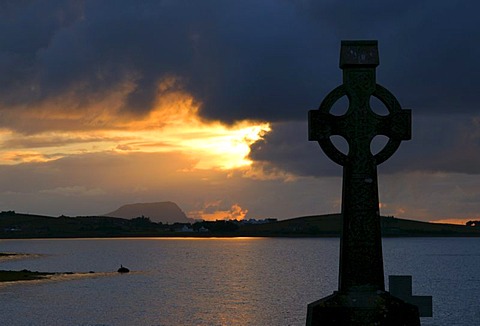
It seems that no one knows for certain where the phrase “thin places” comes from but most agree that it is of Celtic origin and most likely from Ireland. The phrase is used to describe those places where the boundary between heaven and earth seems to be thinner than in other places. Therefore when we encounter these thin places we get a powerful sense of inner peace with very little effort on our part.

In my life I have encountered a number of thin places. Near my childhood home there is a lovely waterfall which flows over a cliff to a creek below. Climbing down the rugged cliff face you can feel the humidity increase and the temperature lower. Once you are down next to the water you are in another world. It is a world full of life and stillness and peace. For me, this is a thin place where God seems truly present.

Other thin places I have visited seem to center around holy sites. Some of the great cathedrals of England, or monasteries, or seminary chapels have been thin places to me. In many of these places it has been as though I entered a different world and can truly feel the prayers of those who have sought the presence of God in that place.

Scripture is also ripe with descriptions of thin places. Mount Saini, the Temple in Jerusalem, Peniel, where God wrestled with Jacob are all examples of physical places where God chose to be present more than in other places.


Now don’t get me wrong, I know that God can be present anywhere, and can fill out hearts at any time and in any place. However, I think that for those of us who have felt God’s presence every time we go to a certain place we have a slight glimpse into what it must be like to be in the world beyond ours where our Lord waits with his loving embrace. It is that place where there is no barrier we all long for. Thanks be to God for giving us a glimpse into it in from these places where God’s spirit seems to dwell. 

Tuesday, April 25, 2017

The Power of Christian Relationships and the Rev. Author Stanton

Very few people will have heard of the Rev. Author Stanton, who lived from 1839 to 1913 and served as curate for St. Albin’s Parish in Holborn, England for fifty years. Such long-term cures are very rare today. However, where they are found, they are almost always an indication of real spiritual health in the life of a church. From all indications, this was just as true in Fr. Stanton’s day as it is in our own.

During his service, Fr. Stanton became a much-loved figure because of his dedication to the people of his parish. Because St. Albin’s was in a very economically challenged area, Fr. Stanton became a champion of the poor.   Among other things this priest founded organizations and clubs dedicated to the working class.

Now while those may not seem like great accomplishments, the relationships this man built over his fifty years of service, awarded him a funeral procession larger than that of Queen Victoria! A funeral procession, not to the cathedral of St. Paul’s who offered him a niche, but to the humble working man’s graveyard where he is buried today.

As I reflect on his life, I am reminded of the power of human relationships and the godly necessity of loving and caring for the people in our lives. I am also reminded of how poorly we measure success in our culture. By all accounts, this man should have been promoted and moved up in the church hierarchy more than once. But success in the eyes of God looks very different. Perhaps at the end of his life God looked back and counted how many souls this man nurtured, how many mouths he fed, how many people he prayed with in grief and in joy. No doubt he heard those long sought after words from Jesus, “Well done, my good and faithful servant.…Enter into the joy of your master.” (Matt. 25:21) May all our lives reflect such grace!

Monday, March 20, 2017

Reborn by Water and the Spirit

Many of us may be familiar with the story of Nicodemus. (John 3:1-17) The prominent Jewish leader who comes to Jesus at night. Nicodemus, like many religious people of his day, is all in his own head. He likely has the Jewish law practically memorized, goes to temple every chance he gets, and knows all the small nuances to what it means to be a follower of God. And then he hears about Jesus. A man he knows is from God because he cannot deny the miracles he is doing. But when he finally meets Jesus, Jesus doesn’t say what Nicodemus expects. Instead Jesus seems to be speaking in riddles about water and being born again. What Jesus is saying doesn’t seem helpful to Nicodemus. But there is no denying Jesus is from God. So, Nicodemus walks away with lots to think about.

So, what was Jesus trying to tell Nicodemus that was so important? Well he seems to be saying that being with God is not about following a set of strict rules, but rather about changing our understanding of the nature of our existence in this world. He is saying that we need to see the world differently. We need to change our prospective of our reality. We need to change the narrative we have been telling ourselves. And when we make that shift in our thinking we enter a whole new world with a whole new outlook on life. We suddenly find ourselves with a new set of values, a new prospective, new goals, and new measures of success. It is as if we are born into some new type of existence.

In this new way of existing we no longer live for selfish desires like, fame or our riches. Instead we begin living our lives with the sole purpose of living out God’s will, no matter what the call. And in that change we find the greatest freedom we could ever imagine.

One saint who exemplifies this type of vision for the world is St. Patrick. The son of well to do Roman citizens living in England who was kidnapped as a child and forced to live in slavery in Ireland. After Patrick escapes he could easily have returned home, enjoyed the wealth of his family, plotted his revenge, and enacted it by dealing a lethal strike on his captors. But instead Patrick chose to follow the way of Christ. He chose to embrace a faith that had sustained him during the suffering of his captivity.

One can holy guess how he survived; how he remained resilient during this time. Perhaps he was able to recall such stories from scripture where people had survived this type of pain. Stories like Joseph who was betrayed and sold into slavery by his own brothers. Or Daniel who was tossed into the lion’s den by his slave holders.

However he did it, it is obvious that Patrick saw the world differently that most would. Patrick saw his captors not as an evil that needed to be purged, but rather Patrick, being reborn by water and the Spirit sees them with love, pity, and with a longing to see the image of God in them restored to that it was created to be. He sees them not as the object of his hatred, but as children of God.

My friends, that is how we should also see the world. When difficulties enter our live we need to cling to the promise of God by faith. We need to embrace living in this new reality where humiliation just increases our humility. Where suffering brings us closer to the sufferings of Jesus. Where we cannot be threatened because death itself has no power in our lives. Where money and fame and popularity are no longer our selfish ambitions and therefore have no control over us. Rather our "light yoke" is one of generosity and compassion and self-abasement.


My friends, we have been born by water and the spirt in our baptism, perhaps then we ought to think about what that really means, and embrace a reality that is our inheritance as a member of God's family. We need to embrace a spiritual and godly reality in this life that is nurturing to our soul. We need to embrace a way that brings peace and joy and love to us and to all those who enter our life. As we embrace this new life giving reality, we also ought to tell other people about this new way of living. Tell them what it is to be reborn be water and the spirit, so that all of God’s children can enjoy the peace of living in His kingdom.